Waking Up With a Racing Heart: Causes, Triggers, and Clinical Context
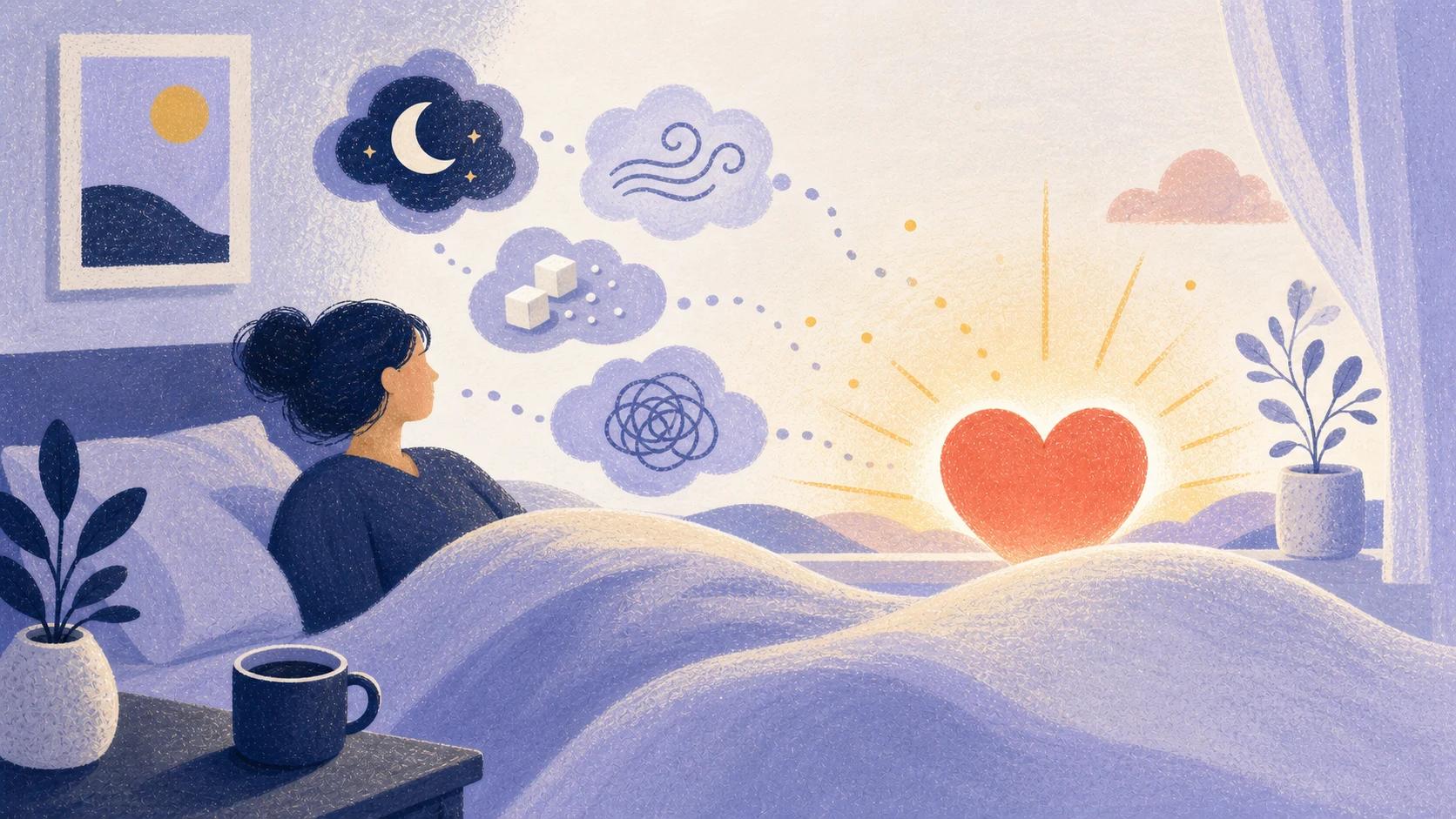
Jolting awake with a pounding, racing heart can reflect stress hormones, sleep apnea, alcohol, blood sugar shifts, or arrhythmias.
We care about your heart. If you think you may be having a medical emergency — including chest pain or pressure, difficulty breathing, fainting, or signs of a stroke — call 911 or go to your nearest emergency department now.
Few things are as jarring as being yanked out of sleep by a heart that's pounding or racing — sometimes with a jolt of panic, a sweat, or a gasp for air. It can leave you wide awake at 3 a.m., wondering whether something is seriously wrong.
Waking with a racing heart often has an explainable, manageable contributor. Because sleep apnea and intermittent arrhythmias can also show up at night, recurring episodes are best understood in context.
Common Causes of Waking Up With a Racing Heart
Adrenaline surges and stress
Your body's stress hormones don't switch off at night. A vivid dream, a nightmare, or simmering stress can release a burst of adrenaline that speeds the heart and wakes you. This is a common non-arrhythmic contributor.
Blood sugar dips
An overnight drop in blood sugar (especially if you've had alcohol, skipped dinner, or have diabetes) triggers adrenaline to correct it — and that can wake you with a pounding heart, shakiness, and sweating.
Sleep apnea
In obstructive sleep apnea, breathing repeatedly pauses during sleep. Each pause stresses the heart and can jolt someone awake with a racing pulse. Clues include loud snoring, gasping awake, morning headaches, and daytime exhaustion. Untreated sleep apnea is a recognized risk factor for atrial fibrillation and other arrhythmias (American Family Physician, 2011; 2024) — and treating it with CPAP has been shown to lower rates of arrhythmia and stroke (American Family Physician, 2016). That link is why sleep-related breathing symptoms matter in the clinical history.
Alcohol
Drinking, especially in the evening, is a classic trigger. As alcohol is metabolized overnight, it can cause "rebound" sympathetic activity — the so-called "holiday heart" effect — and wake you with palpitations.
Caffeine and stimulants
Caffeine lingers for hours. An afternoon or evening coffee can still be active at bedtime, priming your heart to race.
Hormonal shifts
Perimenopause and menopause commonly bring nighttime palpitations and waking with a fast heart, often alongside night sweats.
Arrhythmias
Sometimes the cause is an actual rhythm disturbance — AFib, SVT, or frequent extra beats — that happens to fire during sleep and wakes you.
Features That May Indicate A More Serious Cause
Waking with a racing heart tends to draw closer review when it:
- Happens frequently
- Comes with gasping, choking, or loud snoring (possible sleep apnea)
- Features an irregular pulse
- Is paired with breathlessness, chest discomfort, or lightheadedness
- Leaves you exhausted during the day
High Risk Symptoms
A racing heart paired with the following symptoms is higher risk than routine outpatient palpitations:
- Chest pain or pressure
- Severe shortness of breath that doesn't ease
- Fainting or near-fainting
- Severe, persistent dizziness
Why Nighttime Episodes Are Hard to Diagnose
A racing heart at 3 a.m. is almost never present during a daytime clinic visit. A short EKG can't see what your heart did while you were asleep, so these episodes routinely go undocumented — and unanswered.
Extended monitoring solves this — and it's the approach guidelines endorse, listing ambulatory patch recorders and mobile cardiac telemetry for capturing arrhythmias that come and go (ACC/AHA/HRS syncope guidelines, American Family Physician, 2018). A Zio® patch records continuously through up to 14 days and nights, capturing what your heart actually does during sleep and the moment you wake. By logging when you wake with symptoms, you let a physician match the sensation to the rhythm — distinguishing a benign adrenaline surge from an arrhythmia that needs attention.
Through telehealth, a licensed physician can review your symptoms and send a patch to your home when appropriate, without a long wait.
In the Meantime
- Avoid caffeine after midday and alcohol close to bedtime.
- Don't go to bed hungry; watch for blood-sugar swings.
- Ask about a sleep apnea evaluation if you snore or gasp awake.
- Keep a bedside log: time you woke, how it felt, what you ate or drank.
Sources & Further Reading
This article draws on peer-reviewed clinical literature:
- Clinical Indicators of Obstructive Sleep Apnea. American Family Physician (2011) — OSA and atrial fibrillation.
- Home Sleep Apnea Testing for Patients With Cardiovascular Disease. American Family Physician (2024) — how sleep apnea affects the heart.
- Diagnosis and Treatment of Obstructive Sleep Apnea in Adults. American Family Physician (2016) — CPAP and arrhythmia/stroke rates.
- ACC/AHA/HRS Syncope Evaluation and Treatment Guidelines. American Family Physician (2018) — ambulatory monitoring for intermittent symptoms.
The Bottom Line
Waking up with a racing heart may be traceable to stress, blood sugar shifts, alcohol, caffeine, hormones, or sleep apnea. Because arrhythmias and sleep apnea can also present overnight, recurring episodes are best understood by documenting what the heart is doing during sleep and on waking.
This blog post is for educational purposes only and is not a substitute for professional medical advice. If you're experiencing chest pain, severe shortness of breath, or think you're having a heart attack, call 911 immediately.