Why Can My Heart Feel Like It Skips When I Breathe or Bend Over?
A skipped-beat sensation with breathing or bending can reflect normal rhythm variation, position, premature beats, or coincidence. Here's the clinical context.
We care about your heart. If you think you may be having a medical emergency — including chest pain or pressure, difficulty breathing, fainting, or signs of a stroke — call 911 or go to your nearest emergency department now.
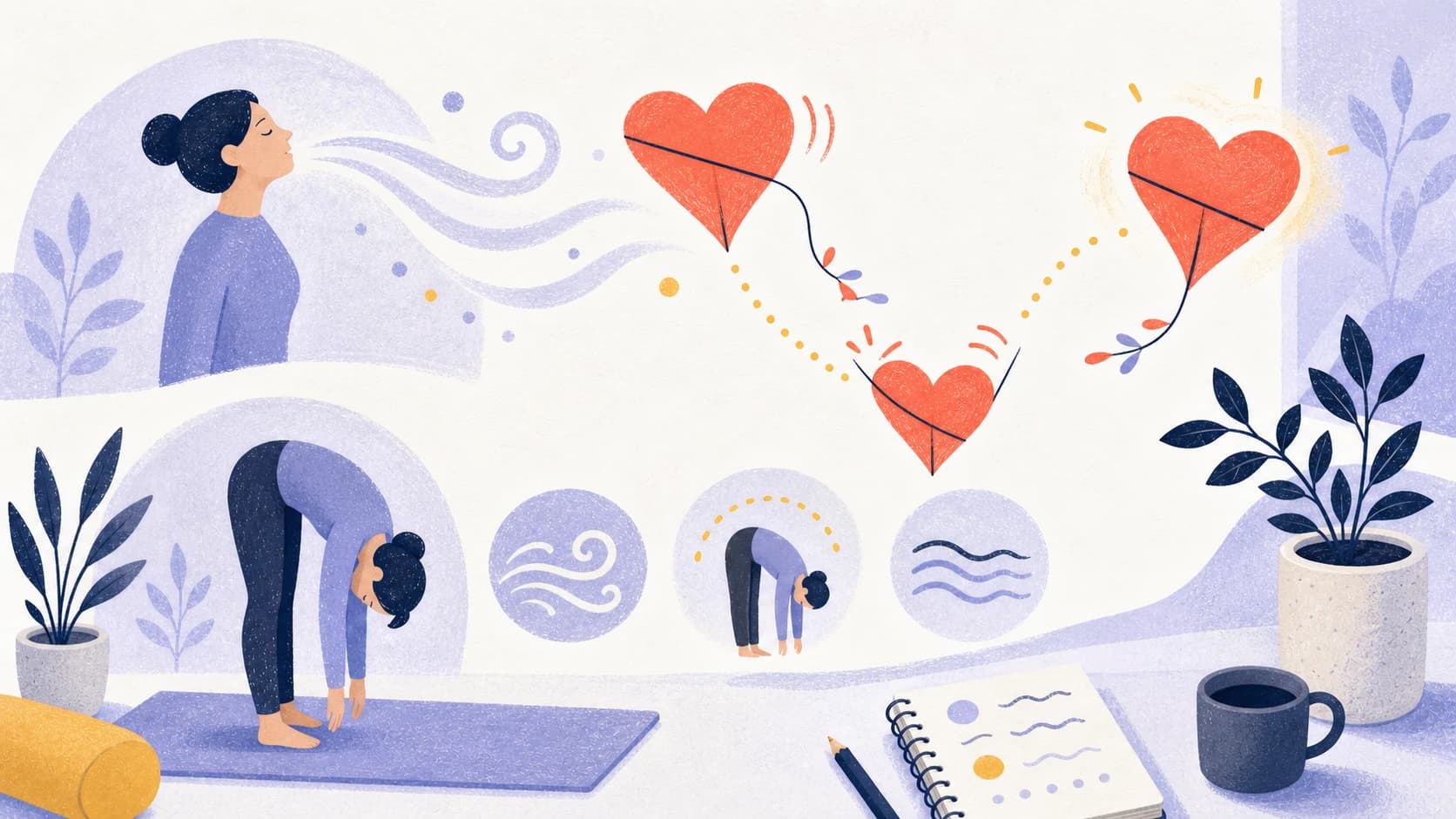
It's a strangely specific sensation: you take a deep breath, bend down to tie your shoes, or twist to reach something — and your heart does a little skip, flip, or thump. If a particular movement or breath seems to "trigger" a skipped beat, it can feel like you've found something alarming. Often, the explanation is ordinary physiology plus timing, but the sensation alone does not identify the rhythm.
The Everyday Physiology Behind It
Your heart rate already changes with your breath
Here's a fact that surprises people: it's normal for your heart rate to speed up slightly when you inhale and slow when you exhale. This is called respiratory sinus arrhythmia, and it's a sign of a healthy, responsive heart — not a disorder, despite the scary-sounding name. A deep breath can make this normal variation more noticeable.
Bending over changes the pressures in your chest
When you bend, twist, or lie a certain way, you shift the position of your heart slightly and change the pressure around it. You also stimulate the vagus nerve, which influences heart rhythm. This can make an occasional extra beat (a PVC or PAC) more likely to surface — or simply easier to feel.
Position brings the heart closer to the surface
Just like lying on your left side, certain bends and postures bring the heart nearer to the chest wall, so a normal or extra beat feels more pronounced.
The "trigger" may be coincidence plus attention
Extra beats are often random. If you're paying attention while breathing deeply or bending, you're simply more likely to catch one in the act — which makes it feel causally linked even when it isn't.
So Is It a Problem?
For many people, an occasional skipped beat tied to breathing or movement is a premature beat (PVC or PAC), respiratory sinus arrhythmia, or a normal beat made more noticeable by position and attention. Premature beats are common, including in people without known heart disease.
Common aggravators worth trimming:
- Caffeine, alcohol, and nicotine
- Stress and poor sleep
- Dehydration or low electrolytes
Features That Make the Pattern More Clinically Notable
Breath- or movement-linked skipped beats tend to draw closer review when they:
- Become frequent or feel near-constant
- Come in runs (several in a row)
- Are paired with dizziness, breathlessness, fatigue, or chest discomfort
- Get worse with exertion instead of easing
- Occur with a known heart condition or strong family history
High Risk Symptoms
Skipped beats paired with the following symptoms are higher risk than routine outpatient palpitations:
- Chest pain or pressure
- Severe shortness of breath
- Fainting or near-fainting
- A sustained, very rapid or wildly irregular heartbeat
How to Know for Sure
A movement- or breath-triggered skip is almost impossible to reproduce on command during a brief office EKG. That's why these sensations so often go undocumented — and why people are left wondering.
A Zio® patch records every beat for up to 14 days as you go about normal life — breathing, bending, twisting, and all — the kind of ambulatory recording guidelines endorse for documenting "palpitations of uncertain etiology" (American Family Physician, 2020). When you log a skip, a physician can count how often they truly occur and confirm whether they're benign extra beats (the usual, reassuring answer) or something that warrants a closer look. The reason runs matter: three or more consecutive ventricular beats above 100 per minute is the formal definition of ventricular tachycardia (Cochrane Database of Systematic Reviews, 2026), so knowing your actual "PVC burden" — and whether skips ever cluster — is what turns an unsettling sensation into a clear answer.
Through telehealth, a licensed physician can review your symptoms and send a patch to your home when appropriate, without a long wait.
In the Meantime
- Ease off caffeine, alcohol, and nicotine and watch for a change.
- Prioritize sleep and hydration.
- Try not to "test" the trigger repeatedly — attention amplifies the sensation.
- Keep a brief log of when skips happen and what you were doing.
Sources & Further Reading
This article draws on peer-reviewed clinical literature:
- KardiaMobile for ECG Monitoring and Arrhythmia Diagnosis. American Family Physician (2020) — recording palpitations of uncertain etiology.
- AI-Enabled Electrocardiography and Ventricular Tachycardia. Cochrane Database of Systematic Reviews (2026) — definition of ventricular tachycardia.
The Bottom Line
A heart that "skips" when you breathe deeply or bend over may be showing normal breath-linked rhythm variation, a premature beat, or a normal beat made noticeable by position and attention. If the skips are frequent, occur in runs, or come with other symptoms, recording over days is the dependable way to document what rhythm is actually present.
This blog post is for educational purposes only and is not a substitute for professional medical advice. If you're experiencing chest pain, severe shortness of breath, or think you're having a heart attack, call 911 immediately.