Heart Palpitations at Night: Why They Happen and What to Watch For
Here's why bedtime makes your heartbeat more noticeable, the common causes, and the features that make some episodes worth a closer look.
We care about your heart. If you think you may be having a medical emergency — including chest pain or pressure, difficulty breathing, fainting, or signs of a stroke — call 911 or go to your nearest emergency department now.
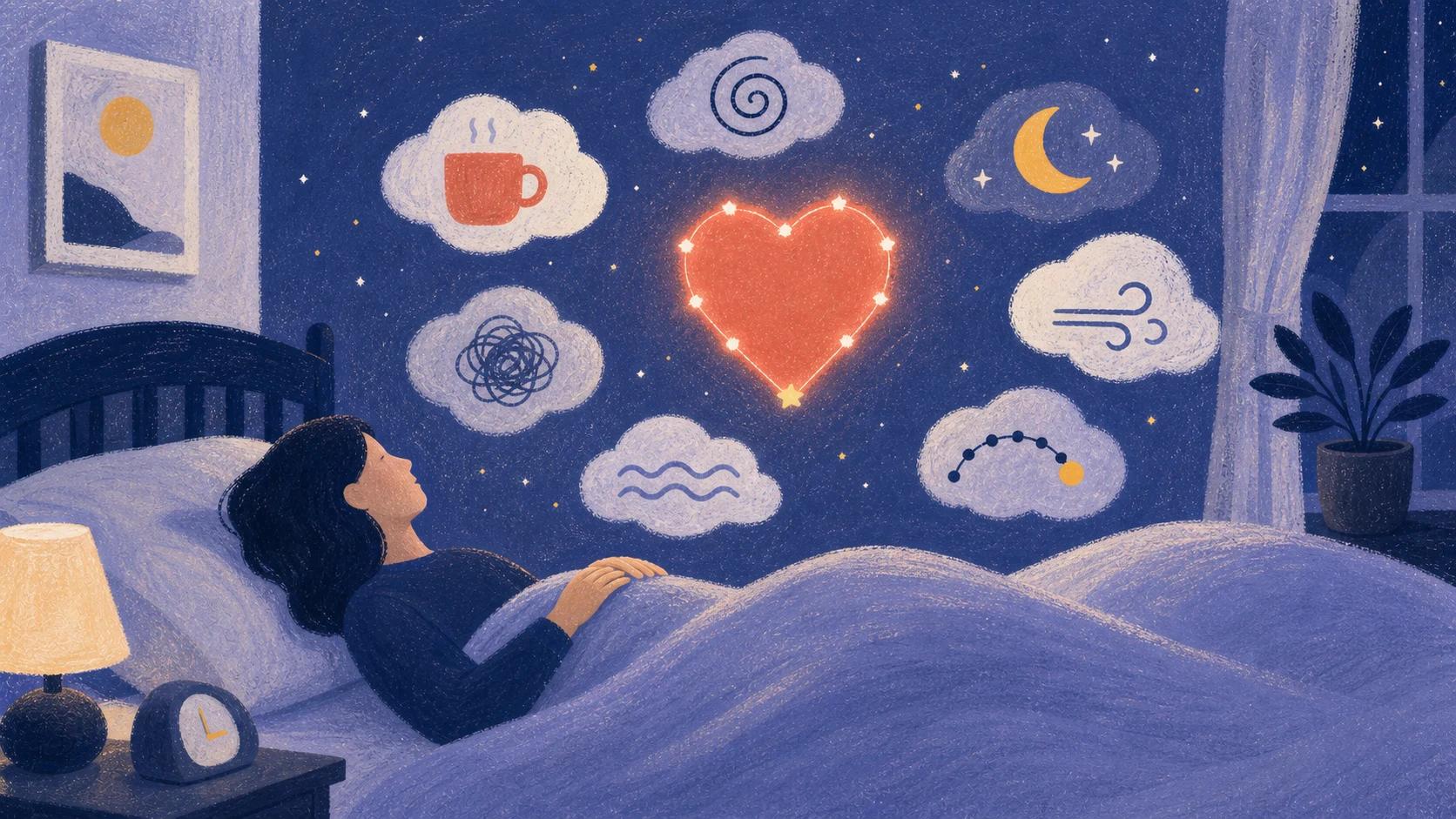
You're lying in bed, the room is quiet, and suddenly you're acutely aware of your heart — pounding, fluttering, or skipping. Nighttime palpitations are one of the most common reasons people start worrying about their heart, partly because they can feel so dramatic in the dark and the silence.
Many nighttime palpitations reflect awareness, triggers, or premature beats. The harder part is identifying when the pattern points to something more than awareness alone.
Why Palpitations Feel Worse at Night
Your heart often isn't doing anything new at night — you're just in the perfect conditions to notice it.
- It's quiet and still. With no activity or background noise to distract you, subtle sensations become obvious.
- You're lying down. Certain positions, especially on your left side, bring your heart closer to the chest wall, making each beat easier to feel.
- Your senses are tuned inward. As you try to fall asleep, attention naturally turns to bodily sensations — and a single skipped beat can feel alarming.
- Digestion and posture. Lying down after a meal can stimulate the vagus nerve and make the heartbeat feel more prominent.
So part of the answer is simply: nighttime amplifies your awareness.
Common Causes of Nighttime Palpitations
Common contributors include everyday triggers:
- Caffeine — especially later in the day; it lingers for hours.
- Alcohol — a well-known trigger, sometimes hours after drinking.
- Stress and anxiety — racing thoughts at bedtime can drive a racing heart.
- Eating a large meal before bed.
- Dehydration or low electrolytes.
- Hormonal shifts — including perimenopause and menopause.
- Premature beats — PVCs and PACs, which many people have, including people without known heart disease.
Features That Make Palpitations More Notable
Not all palpitations carry the same weight. In primary-care studies of people evaluated for palpitations, a handful of features were associated with a higher likelihood that the cause was a cardiac rhythm problem rather than a benign extra beat (American Family Physician, 2017):
- Palpitations that wake you from sleep — notably one of the features tied to a cardiac cause, and the defining trait of nighttime episodes
- A personal history of heart disease
- Episodes paired with fainting or near-fainting
- A regular, rapid, pounding sensation in the neck
- A family history of arrhythmia or sudden cardiac death
That same review is reassuring on the whole: among palpitations evaluated in primary care, the largest share traced back to anxiety or stress, with atrial fibrillation and other arrhythmias making up a smaller portion. None of these features mean something is definitely wrong — they're simply the patterns that are hardest to sort out without recording the heart in the act.
One nighttime-specific cause worth flagging: sleep apnea
When palpitations come alongside loud snoring, gasping or choking awake, or unrefreshing sleep, obstructive sleep apnea (OSA) is one recognized contributor to be aware of. When breathing repeatedly pauses at night, blood oxygen drops and the heart is stressed — and OSA is a recognized risk factor for atrial fibrillation and other arrhythmias (American Family Physician, 2011; 2024). The encouraging part: treating OSA, typically with CPAP, has been shown to lower rates of arrhythmia and stroke (American Family Physician, 2016).
When Palpitations Come With Other Symptoms
Palpitations by themselves are different from palpitations paired with chest pain or pressure, severe shortness of breath, fainting or near-fainting, or severe, persistent dizziness. Those are high-risk symptoms rather than an isolated flutter — which is why palpitations accompanied by fainting or near-fainting are treated as a higher-risk combination in cardiology (American Family Physician, 2017).
The Hard Part: Catching a Nighttime Rhythm
Here's the catch with nocturnal palpitations — they almost never happen during a daytime clinic visit. A 10-second EKG at 2 p.m. tells you nothing about what your heart did at 2 a.m.
This is where extended monitoring earns its keep. Cardiology guidelines specifically endorse ambulatory tools — Holter monitors, adhesive patch recorders, and mobile cardiac outpatient telemetry — for capturing arrhythmias in people whose symptoms come and go (ACC/AHA/HRS syncope guidelines, American Family Physician, 2018). A Zio® patch records continuously for up to 14 days and nights, including while you sleep, capturing the very episodes that wake you. When you log a symptom, a physician can match what you felt to your actual rhythm at that moment — turning a scary 3 a.m. sensation into a documented answer.
How to Get Monitored
Telehealth can shorten the path to outpatient rhythm documentation. Through physician review, a Zio® patch can be sent to the home when appropriate — worn during normal life, including overnight, and read by a physician afterward.
In the Meantime
- Cut caffeine and alcohol, especially in the evening.
- Keep a bedtime symptom log (time, what you ate or drank, how it felt).
- Wind down before bed — stress reduction genuinely helps.
- Stay hydrated through the day.
Sources & Further Reading
This article draws on peer-reviewed clinical literature:
- Clinical Indicators of Obstructive Sleep Apnea. American Family Physician (2011) — OSA and atrial fibrillation.
- Home Sleep Apnea Testing for Patients With Cardiovascular Disease. American Family Physician (2024) — how sleep apnea affects the heart.
- Diagnosis and Treatment of Obstructive Sleep Apnea in Adults. American Family Physician (2016) — CPAP and arrhythmia/stroke rates.
- ACC/AHA/HRS Syncope Evaluation and Treatment Guidelines. American Family Physician (2018) — ambulatory monitoring for intermittent symptoms.
- Palpitations: Evaluation in the Primary Care Setting. American Family Physician (2017) — clinical features associated with a cardiac cause, and how common benign causes are.
- Syncope: Evaluation and Differential Diagnosis. American Family Physician (2017) — palpitations with fainting as a higher-risk feature.
The Bottom Line
Nighttime palpitations can feel more dramatic because bedtime makes the heartbeat impossible to ignore. Many are explained by awareness or common triggers, but episodes that are frequent, sustained, irregular, or paired with other symptoms are hard to characterize from a brief office EKG. Recording over days and nights is what connects the symptom to the rhythm.
This blog post is for educational purposes only and is not a substitute for professional medical advice. If you're experiencing chest pain, severe shortness of breath, or think you're having a heart attack, call 911 immediately.