Heart Palpitations After Eating: Possible Causes and Clinical Context
Palpitations after meals can reflect digestion, stimulants, reflux, blood sugar shifts, or a rhythm issue. Here's how to think about the pattern.
We care about your heart. If you think you may be having a medical emergency — including chest pain or pressure, difficulty breathing, fainting, or signs of a stroke — call 911 or go to your nearest emergency department now.
You finish a meal, sit back, and suddenly notice your heart pounding, fluttering, or skipping. Palpitations after eating are surprisingly common, and they catch people off guard precisely because eating feels like it should be calming, not heart-racing.
Often, post-meal palpitations are explainable by physiology or triggers. The key is whether the rhythm during the episode is normal, an extra beat, or an arrhythmia.
Why Eating Can Make Your Heart Race
Digestion redirects blood flow
After a meal, your body sends extra blood to the digestive tract. To compensate, your heart rate can tick up slightly — and some people feel that as a palpitation.
Large or heavy meals
A big meal stretches the stomach and can stimulate the vagus nerve, which influences heart rhythm. Large, rich, high-fat, or high-carb meals are common culprits.
Blood sugar swings
A meal loaded with refined carbs or sugar can raise blood glucose and, in some people, be followed by symptoms that feel adrenergic — shakiness, sweating, and a faster heartbeat. Blood sugar is one possible contributor, especially when episodes cluster around high-carbohydrate meals or alcohol.
Specific triggers in food and drink
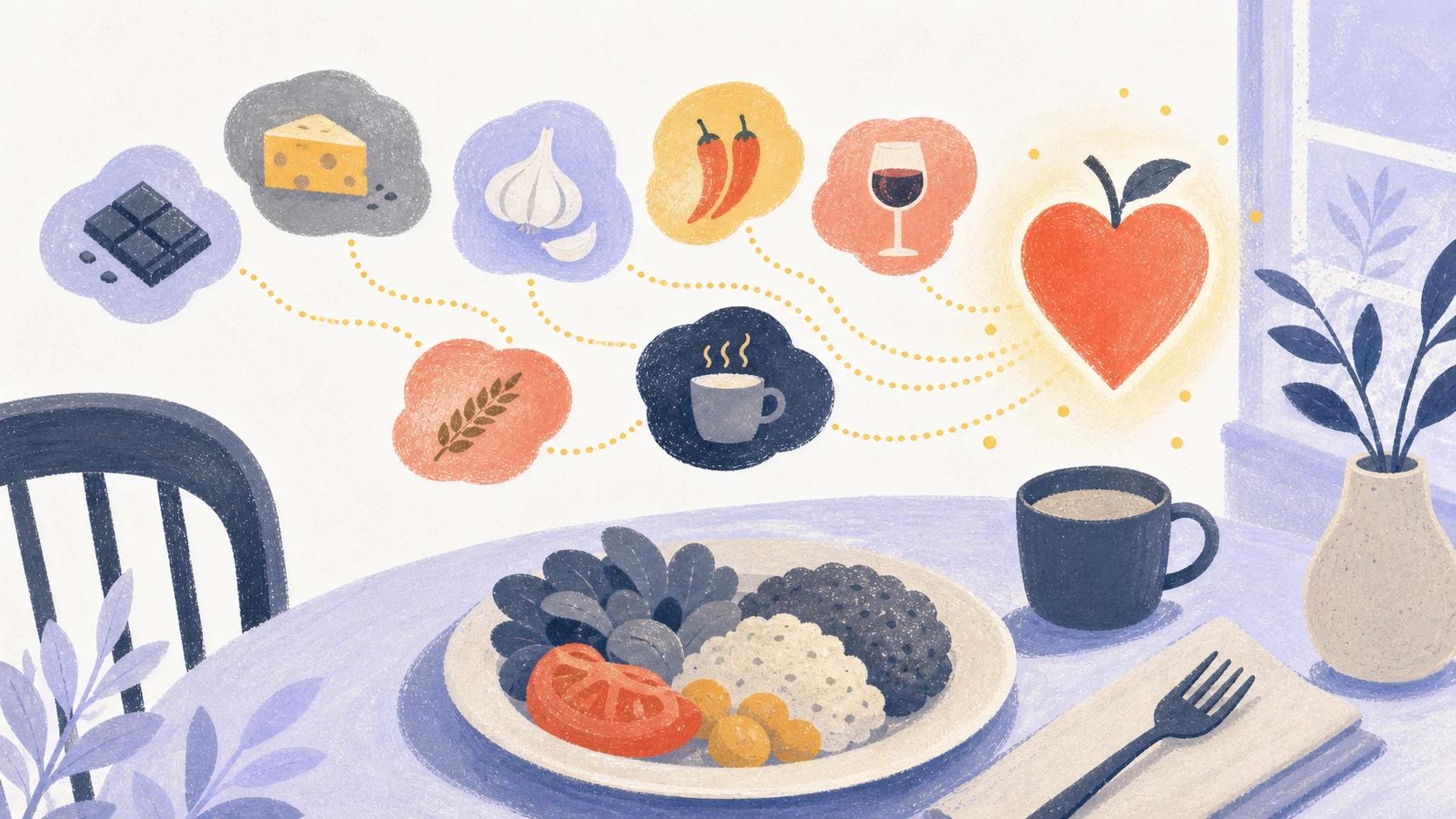
- Caffeine (coffee, tea, chocolate, energy drinks)
- Alcohol (a very common trigger, even modest amounts)
- High-sodium or heavily processed foods
- MSG or other additives, in sensitive people
- Tyramine-rich foods (aged cheese, cured meats) in some individuals
Sensitivities and reflux
Acid reflux after eating can produce chest sensations easily mistaken for, or coinciding with, palpitations.
Patterns That Are Often Lower Risk
- They're brief and settle on their own
- They follow an obvious trigger (a large meal, coffee, wine)
- You feel otherwise well — no dizziness, breathlessness, or chest pain
- They're occasional, not a daily occurrence
Features That Make the Pattern More Clinically Notable
Post-meal palpitations tend to draw closer review when they:
- Happen frequently or are getting worse
- Feel irregular or come in sustained runs
- Come with lightheadedness, breathlessness, or chest discomfort
- Occur alongside symptoms of low blood sugar that concern you
- Disrupt your daily life or sleep
High Risk Symptoms
Palpitations paired with the following symptoms are higher risk than routine outpatient palpitations:
- Chest pain or pressure
- Severe shortness of breath
- Fainting or near-fainting
- Severe, persistent dizziness
How to Pin Down the Cause
The tricky thing about meal-related palpitations is the connection: is it the food, the blood sugar, or a genuine rhythm issue triggered by eating? Feeling alone can't tell you.
A Zio® patch records your heart continuously for up to 14 days, capturing exactly what happens after your meals — the kind of ambulatory recording cardiology guidelines endorse for documenting "palpitations of uncertain etiology" (American Family Physician, 2020). When you log a post-meal episode, a physician can see whether your rhythm stayed normal (pointing to digestion, blood sugar, or a food trigger) or whether an actual arrhythmia is being set off. This matters most if the beat feels irregular: an irregular pulse is a clue to atrial fibrillation, but it always needs an ECG to confirm rather than relying on feel (American Family Physician, 2016). That's how you stop guessing.
Through telehealth, a licensed physician can review your symptoms and send a patch to your home when appropriate, without a long wait.
In the Meantime
- Try smaller, more frequent meals instead of large ones.
- Cut back on caffeine and alcohol, especially with or after meals.
- Favor balanced meals (protein, fiber, healthy fats) to blunt blood-sugar spikes.
- Stay hydrated and don't lie down immediately after eating.
- Keep a food-and-symptom diary to spot patterns.
Sources & Further Reading
This article draws on peer-reviewed clinical literature:
- KardiaMobile for ECG Monitoring and Arrhythmia Diagnosis. American Family Physician (2020) — recording palpitations of uncertain etiology.
- Diagnosis and Treatment of Atrial Fibrillation. American Family Physician (2016) — irregular pulse as a clue, confirmed by ECG.
The Bottom Line
Palpitations after eating may reflect digestion, stimulants, reflux, blood sugar shifts, or an intermittent rhythm change. A food-and-symptom log can reveal patterns, but rhythm recording around mealtimes is what separates normal rhythm awareness from a documented arrhythmia.
This blog post is for educational purposes only and is not a substitute for professional medical advice. If you're experiencing chest pain, severe shortness of breath, or think you're having a heart attack, call 911 immediately.