Anxiety or PVCs? How to Tell What's Behind Your Skipped, Racing Heart
Anxiety, PVCs, and other rhythm changes can feel similar — and sometimes feed each other. Here's how to think about the overlap.
We care about your heart. If you think you may be having a medical emergency — including chest pain or pressure, difficulty breathing, fainting, or signs of a stroke — call 911 or go to your nearest emergency department now.
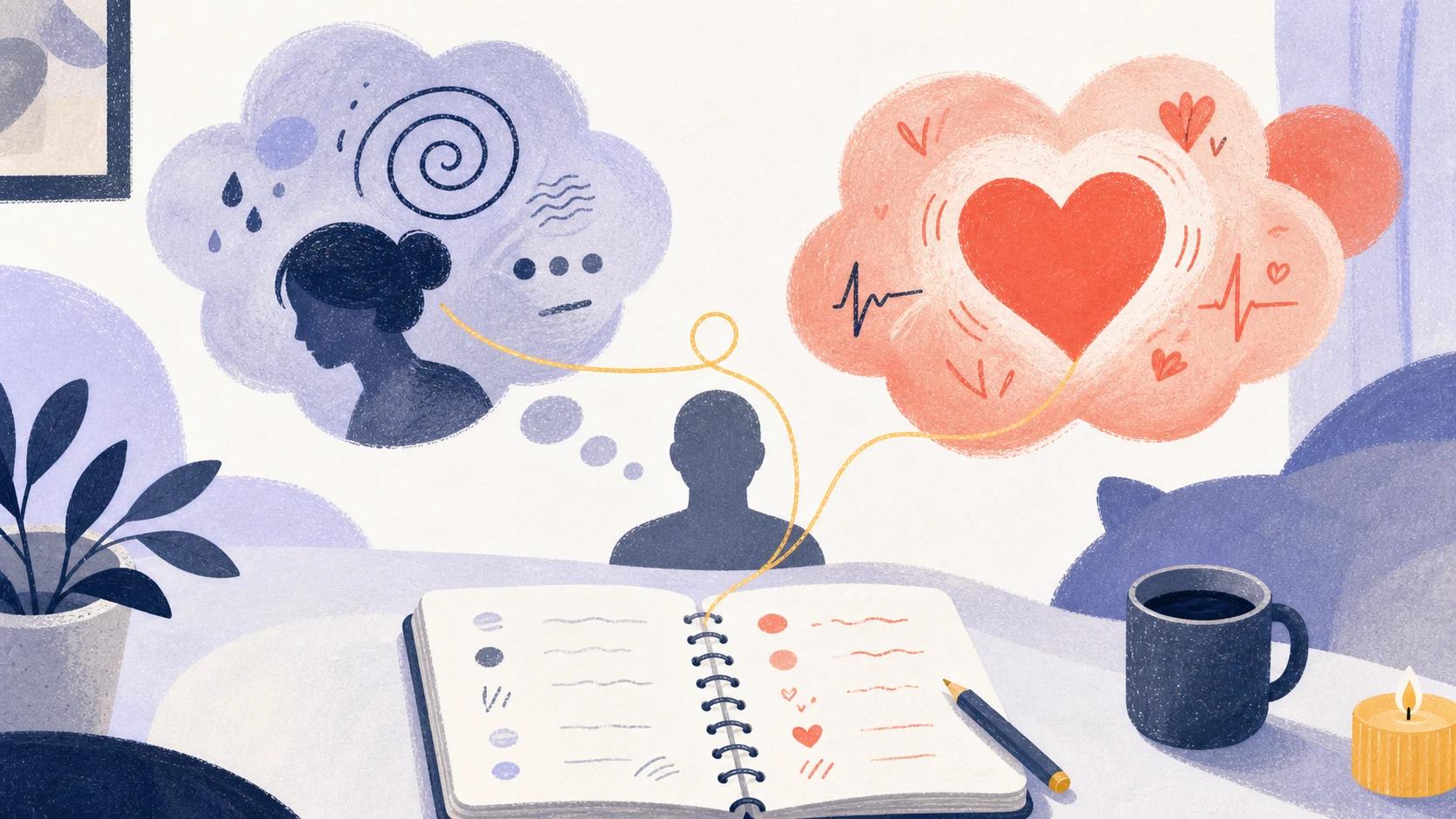
It's one of the most common questions in cardiology and one of the hardest to answer from feeling alone: is my skipped, racing, fluttering heart caused by anxiety, by PVCs (premature ventricular contractions), or by something else? The maddening truth is that these experiences can feel nearly identical — and they often fuel each other in a loop.
Let's untangle them.
Why They're So Easy to Confuse
Anxiety and extra heartbeats overlap in two directions:
- Anxiety can cause palpitations. A surge of adrenaline speeds the heart, increases its force, and can trigger extra beats. The sensation is real and physical, not "in your head" — palpitations and chest tightness are part of the autonomic nervous-system activation that defines a panic attack (American Family Physician, 2022).
- Palpitations can cause anxiety. Feeling your heart skip is alarming, which spikes anxiety, which produces more adrenaline, which can produce more skips. Round and round it goes.
So "is it anxiety or PVCs?" sometimes has the answer: both, taking turns.
What PVCs Can Feel Like
A PVC is an early beat from the ventricles, often followed by a brief pause and then a stronger beat. People may describe:
- A single thud, flip-flop, or skip
- A sensation the heart "dropped" then thumped
- Often isolated moments, sometimes clustered
PVCs can happen completely at rest, out of a calm moment. That timing does not diagnose PVCs by itself, but it is one reason not to assume every palpitation is purely emotional.
What Anxiety-Driven Palpitations Feel Like
Anxiety-related palpitations may:
- Build alongside other anxiety symptoms — tight chest, shortness of breath, tingling, a sense of dread, sweating
- Feel like a sustained fast, pounding heartbeat rather than isolated skips
- Ramp up with worry or stress and ease as you calm down
- Respond to breathing exercises and grounding techniques
Clues That Point One Way or the Other
| Clue | Leans Toward PVCs | Leans Toward Anxiety |
|---|---|---|
| Pattern | Isolated skips/thuds | Sustained racing + dread |
| Timing | Can hit at rest, calm | Tracks with stress/worry |
| Company | Often alone | Bundled with anxiety symptoms |
| Response | Unchanged by calming | Eases with relaxation |
These are tendencies, not proof. Plenty of people have both, and other rhythms can also produce similar sensations.
Why You Shouldn't Just Assume It's "Just Anxiety"
Being told "it's just anxiety" without any recording can be premature. Anxiety is not a rhythm diagnosis; if the question is whether the heart rhythm is normal during symptoms, the rhythm has to be recorded during symptoms. It cuts both ways: cardiac symptoms can be mistaken for anxiety, and anxiety is frequently behind cardiac-feeling symptoms. About one in four people who have a panic attack experience chest pain and shortness of breath, and that overlap often goes unrecognized — leading to more testing rather than less (American Family Physician, 2020). Frequent symptoms are better characterized with data than assumed away.
The One Thing That Settles It
The most informative way to separate anxiety from PVCs (or another arrhythmia) is to record your heart while the symptoms are happening and correlate the two.
A Zio® patch records every beat for up to 14 days. You press a button or log the moment you feel a skip or a surge, and a physician then lines up exactly what your heart was doing against what you felt. If the recording shows a normal rhythm during your symptoms, that's powerful, genuine reassurance — the kind that actually helps the anxiety. If it shows PVCs or something else, now you know, and you can act on it.
Through telehealth, a licensed physician can review your symptoms and send a patch to your home when appropriate — without months of waiting.
High Risk Symptoms
Some symptom combinations are higher risk than routine outpatient palpitations. Examples include:
- Chest pain or pressure
- Severe shortness of breath
- Fainting or near-fainting
- Sustained, very rapid or wildly irregular heartbeat
While Patterns Are Being Sorted Out
- Practice slow, diaphragmatic breathing when symptoms hit.
- Reduce caffeine, alcohol, and nicotine — they aggravate both anxiety and PVCs.
- Log your episodes: time, situation, mood, and what it felt like.
Sources & Further Reading
This article draws on peer-reviewed clinical literature:
- Generalized Anxiety Disorder and Panic Disorder in Adults. American Family Physician (2022) — the physical (autonomic) symptoms of panic.
- Acute Chest Pain in Adults: Outpatient Evaluation. American Family Physician (2020) — overlap of panic and chest symptoms.
- KardiaMobile for ECG Monitoring and Arrhythmia Diagnosis. American Family Physician (2020) — recording palpitations of uncertain etiology.
The Bottom Line
Anxiety, PVCs, and other rhythm changes can feel maddeningly similar, and anxiety can amplify any of them. Recording your rhythm during symptoms is the way to separate a normal rhythm during panic from PVCs or another documented arrhythmia.
This blog post is for educational purposes only and is not a substitute for professional medical advice. If you're experiencing chest pain, severe shortness of breath, or think you're having a heart attack, call 911 immediately.